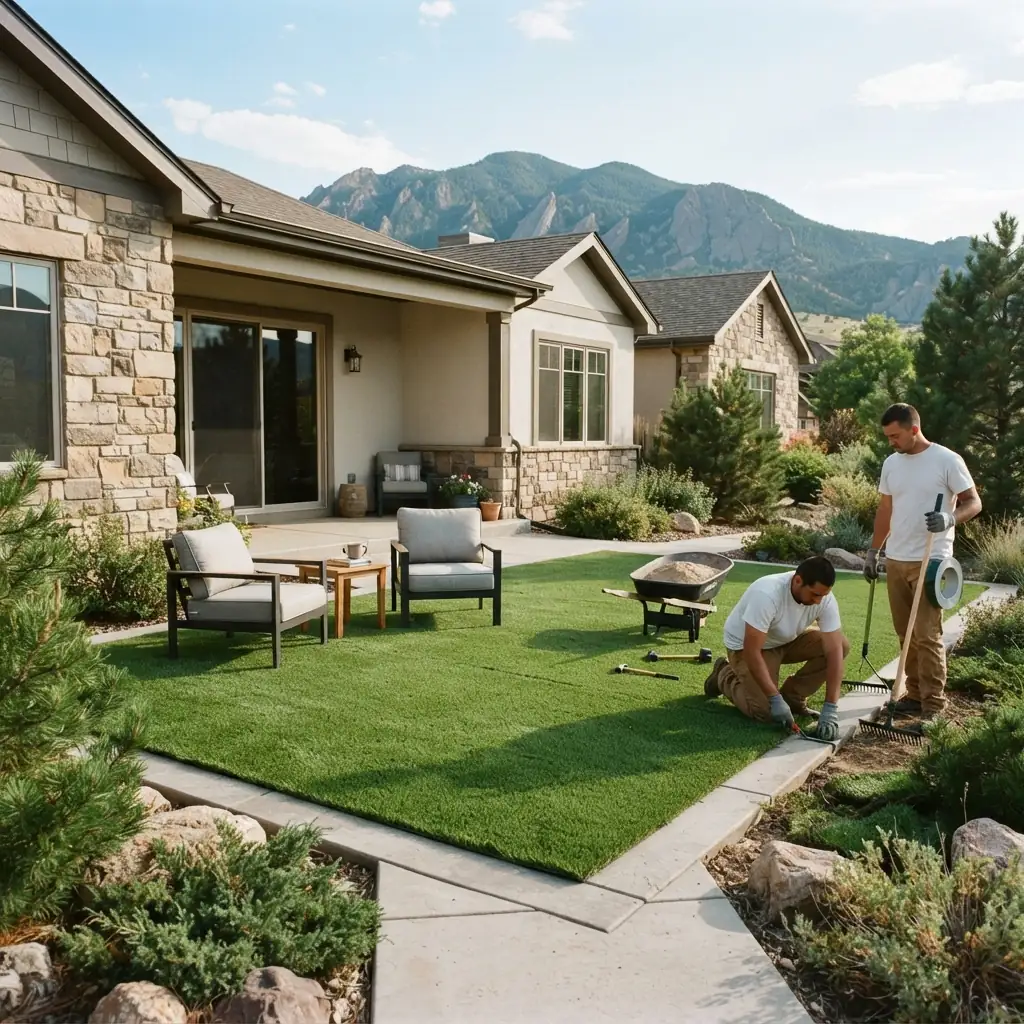
Bare concrete in full foothill sun gets hard and hot. Covering a patio with artificial grass softens it for kids, pets and outdoor furniture without breaking up the slab. We pair Golden homeowners with an independent turf provider close by who installs turf over concrete.
Inspecting the Slab
Turf takes the shape of whatever lies under it, so the concrete has to be in fair condition. Wide cracks, sections lifted by freeze and thaw, and dips that hold water all telegraph through. A provider checks for these and may suggest grinding, patching or a leveling compound first.
They also confirm which way the slab sheds water. Most patios fall gently away from the house, and the turf system has to keep that route open so rain and melting snow can run off.
Cushion and Water Flow
A foam underlay adds give so the surface feels closer to a lawn than a sidewalk. Some pads have channels underneath that steer water toward the slab edge. Without a pad, turf on concrete can feel thin and may stay damp below.
Concrete installs often use less infill. The provider will suggest an amount that supports the fibers without washing off the edges in a storm.
Holding the Edges Down
Turf on concrete is usually secured with outdoor adhesive or heavy seam tape along the perimeter and seams. Where the patio meets a lawn or bed, the edge can be tucked or capped with trim. Steps and thresholds need careful cuts so the turf never becomes a trip point.
Leave clearance at doors so they still swing freely once pad and turf are down.
Planning Turf on a Slab
Send the size of the patio or slab, a note on its condition and how you intend to use it. We forward the details to an independent turf provider who covers Golden, who will visit and quote the job.